
What Chicagoland Families Discover After the Move
There’s a moment that comes for many Chicagoland families. Mom’s falls are getting more frequent. Dad isn’t eating regularly anymore. The conversation about assisted living has been hovering for months — and with it, a heavy feeling nobody wants to name out loud.
Guilt.
The perception that moving a loved one into a community is somehow giving up on them is one of the most common — and most painful — misconceptions families bring to me. After years of helping families across the Chicago suburbs find the right placement, I can tell you that what actually happens after the move is almost always the opposite of what families fear.

What I Walked Into One Afternoon
Let me tell you about a moment that stuck with me.
I walked into an assisted living community for a routine visit and heard cheering coming from the activity room. When I turned the corner, there had to be 20 residents packed in — laughing, calling out scores, some on their feet, some leaning forward in their chairs. They were playing Wii bowling.
I learned later this is a weekly tournament. Every week. Twenty seniors who would have been sitting alone in their living rooms otherwise, instead competing, exercising, and ribbing each other like a league night at the bowling alley.
That’s the part families don’t picture when they’re imagining the move. Assisted living isn’t a place where people quietly fade. For most residents, it’s the most social they’ve been in years. It’s like joining a club they didn’t realize they needed. The activities calendars at most Chicagoland communities are full — exercise classes, card games, outings, live music, holiday parties. Mental health and engagement go up, often dramatically, once a senior is surrounded by peers again.
The Question I Ask Every Family
When the guilt is loudest, here’s a question I ask:
When you go to visit your loved one, what do you want that visit to look like?
By the time assisted living is on the table, the level of care a senior needs is usually beyond what family can sustainably provide at home. Activities of daily living — bathing, dressing, medication management, mobility, toileting — are a 24-hour responsibility. When that responsibility falls on adult children or a spouse, something has to give. And what gives, almost always, is the relationship itself.
Visits stop being visits. They become shifts.
You’re not sitting and listening to Mom tell you the story about Dad’s old fishing boat for the hundredth time — you’re trying to get her showered before her doctor’s appointment and worrying about whether she took her morning meds. The memories you’re making get tangled up in stress.
I’ve had this exact conversation with my own family. When we set up the right care team, something shifted. Family members could walk through the door and just be family again. The visit went back to being a visit.
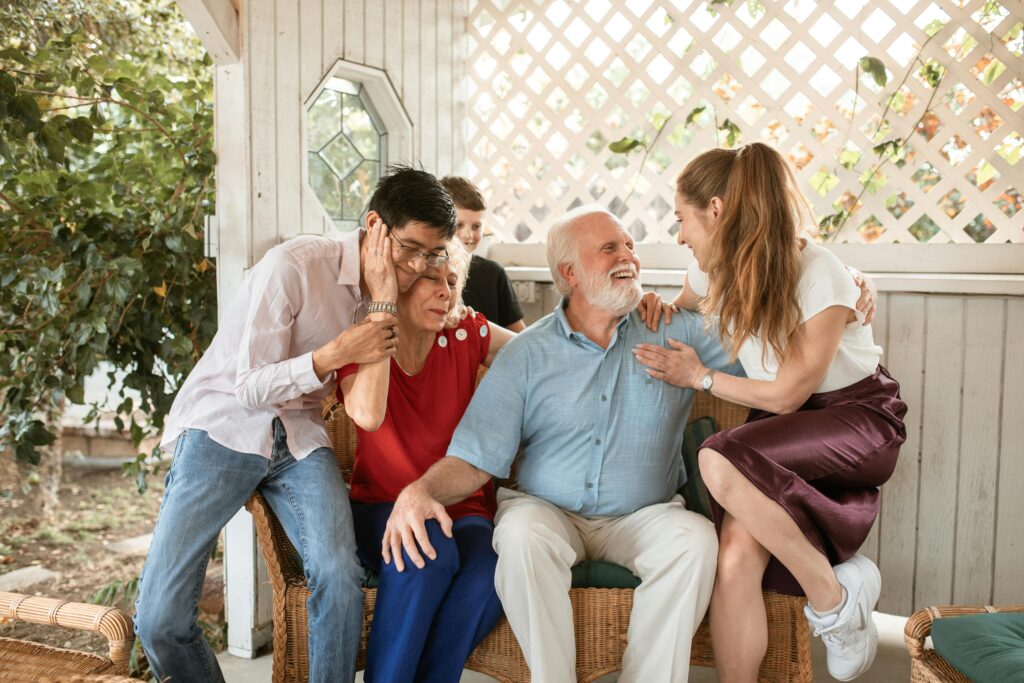
That’s the real promise of a good assisted living placement: your loved one is taken care of by professionals who handle the heavy lifting, and you get to be a son, daughter, or spouse again instead of an exhausted caregiver. The moments you spend together become memories worth keeping — not memories shadowed by stress.
Not Every Assisted Living Community Looks the Same
Another misconception worth clearing up: “assisted living” doesn’t mean one thing.
The communities across Chicagoland range widely. On one end, you have larger communities that feel like upscale apartment complexes — big dining rooms, full event calendars, hundreds of residents, lots of programming. On the other end, there are smaller buildings that feel more like a home, sometimes with only 15 to 30 residents and a familial, quieter rhythm.
The right fit depends entirely on the senior. Some thrive in a busy, social environment with constant activity. Others want something more intimate. There is no single “best” community — there’s the best community for this person.
CCRCs: Communities That Grow With Your Loved One
There’s a category that catches a lot of families by surprise: Continuing Care Retirement Communities, or CCRCs.
A CCRC is built around the reality that your loved one’s needs are going to change over time. Instead of moving from facility to facility as care needs increase, residents move once and the community grows with them. Most CCRCs offer independent living, assisted living, memory care, and skilled nursing all on a single campus.
A few CCRCs Chicagoland families ask me about often:
- Greenfields of Geneva — a continuing care community in Geneva offering the full spectrum of care levels
- Oak Trace in Downers Grove — a well-established community with multiple levels of support on one campus
- Wyndemere in Wheaton — another full-continuum option serving DuPage County families
For families planning ahead — especially when a loved one is still relatively independent but has health conditions that may progress — a CCRC can mean never having to make this decision again. The peace of mind that comes with that is worth a lot.
Where a Senior Living Advisor Fits In
You might be wondering where someone like me fits into all of this.
The Chicagoland senior living market has hundreds of communities. They vary in cost, care level, culture, location, and quality. Some accept Medicaid; many don’t. Some specialize in memory care; others focus on active independent living. Pricing isn’t transparent. Availability changes by the day.
My job, as a senior living advisor, is to know this landscape so families don’t have to learn it from scratch under pressure. I help families understand what their actual options are based on care needs, budget, location preferences, and the personality of the senior we’re placing. I tour the communities. I know the staff. I know which communities consistently deliver — and which ones don’t.
And here’s the part most families don’t expect: our service is free to the family. We’re compensated by the community when a placement happens, similar to how a buyer’s agent works in real estate. There’s no cost to you, no obligation, and no pressure.
If You’re Sitting With the Guilt
If the guilt is what’s holding you back right now, I’ll offer this: the families I’ve worked with almost universally tell me, six months after a good placement, that they wish they’d made the move sooner. Not because they don’t love their parent. Because they finally got to enjoy them again.
Assisted living isn’t abandoning your loved one. Done right, it’s the opposite — it’s giving them back the social life, the care, and the engagement they need, while giving you back the relationship.
If you’re starting to think about assisted living for someone you love anywhere in the Chicago suburbs, I’d be glad to help you understand your options. No cost, no pressure — just a conversation.