
You walk into the lobby. The chandelier is nice. Someone’s playing piano. A staff member greets you by name because the front desk radioed ahead. It feels good.
That feeling isn’t information. It’s staging.
We’ve sat in on more community tours than we can count, and the families who walk away with the clearest picture aren’t the ones who saw the nicest lobby they’re the ones who knew what to actually pay attention to once they got past it.
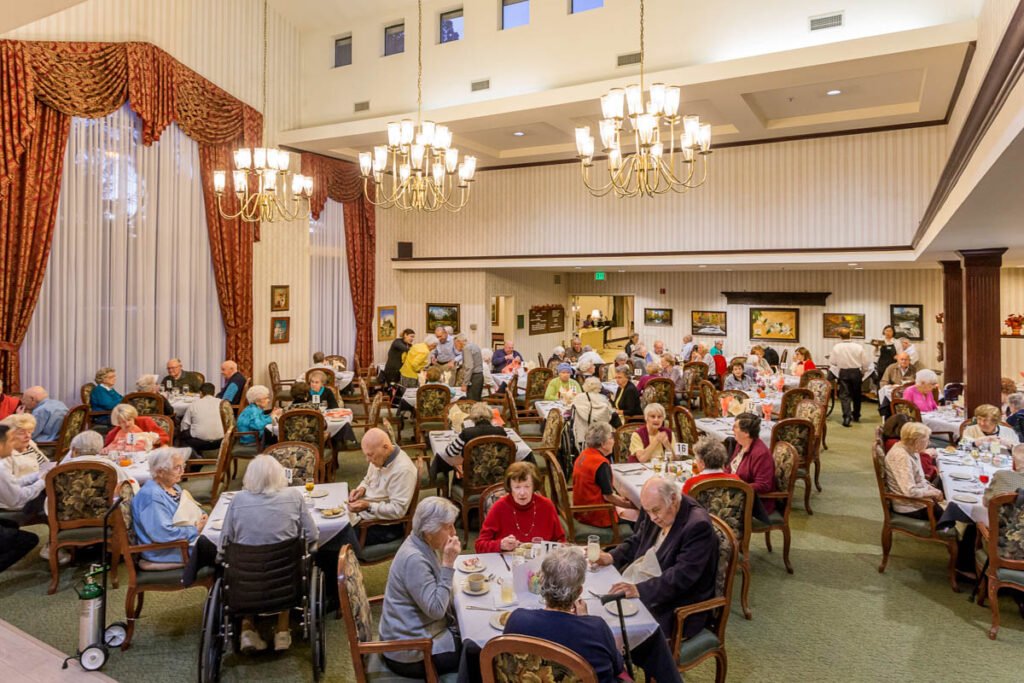
The First 15 Seconds Decide More Than You’d Like
There’s a well-documented pattern in how people form impressions: the first 15 seconds shape a snap judgment, and the next 15 minutes of the tour is mostly your brain looking for evidence to confirm that first read good or bad.
That’s not a knock on your judgment. It’s just how first impressions work, for a restaurant, a job interview, or a community. Which is exactly why the lobby is designed to win those 15 seconds. It’s the one space every community controls completely. The parts that matter are further down the hall.
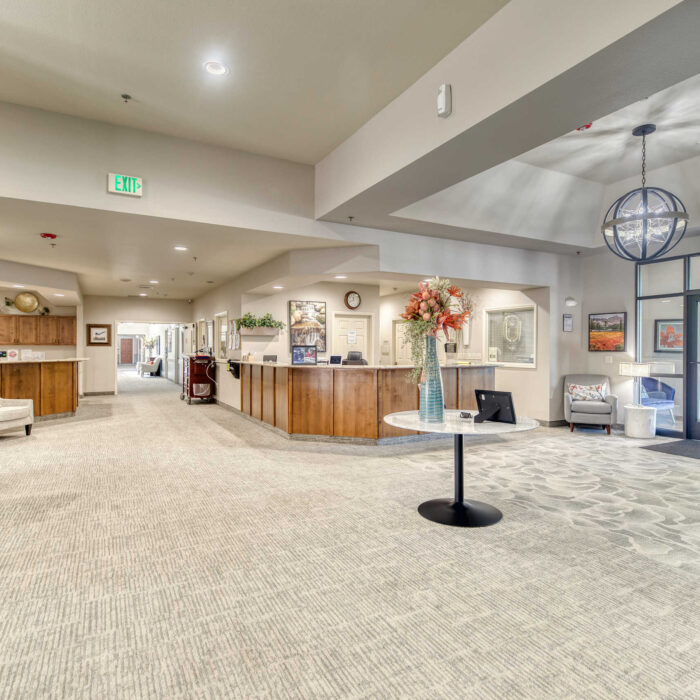
Watch the Hallway, Not the Script
Every tour guide has a route and a rhythm. That’s normal — but it’s also the version of the community they want you to see. The moments that tell you more happen outside the script: how a staff member talks to a resident when they don’t realize a tour is walking by. Is it warm and familiar, or rushed and transactional? Are residents greeted by name, or by “hon” and “sweetie” because nobody bothered to learn who they are?
And pay attention to what you smell. It sounds small, but it’s one of the fastest, most honest signals a building gives you. A community that’s on top of things doesn’t smell like anything in particular. One that’s covering something up usually smells like it’s covering something up.
The Questions Everyone Asks (and Why They Don’t Tell You Much)
Almost every family asks some version of the same three questions:
- How is the food?
- Can I visit whenever I want?
- Can I take my loved one out for appointments or family events?
Here’s the thing — these are easy questions because the answer is basically always going to be fine. Your loved one is moving into a residence, not a facility with restricted visitation. Meals are provided, three times a day, and for the most part they’re decent. Visiting hours are open. Outings are allowed. Asking these questions feels productive, but you’re not going to learn anything that changes your decision.
The Questions That Actually Tell You Something
The families who tour well tend to ask questions that get into staffing and operations — the things that are harder for a community to stage for a 45-minute walkthrough:
- What’s your staffing ratio, and does it change on nights and weekends? A community can look fully staffed during a Tuesday morning tour and look completely different at 2am on a Saturday.
- How many activity coordinators do you have, and what does a typical week of programming actually look like? Not the printed calendar — ask how many of those activities ran last week and how many residents actually attended.
- What does the overnight staff setup look like? Who’s awake, where are they stationed, and how quickly can they respond if someone needs help at 3am?
- What’s your staff turnover been like this year? High turnover often shows up later as inconsistent care, even if everything looks fine on tour day.
- Walk me through what happens if a resident’s needs change. Do they stay in the same apartment with more support brought in, or is there a required move to a different level of care?
These questions take a little more nerve to ask. That’s exactly why they’re worth asking — the answers are harder to script.
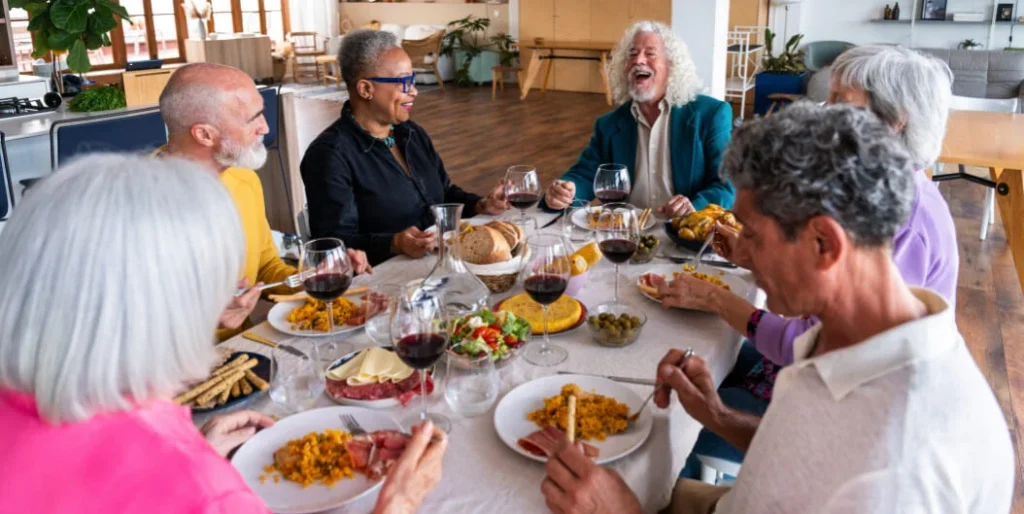
A Good Tour Is About What You Ask to See
The community will show you the model apartment, the dining room during a good meal, and the activity everyone loves. That’s fine — that’s marketing, and it’s not dishonest, it’s just incomplete.
A good tour is about what you ask to see that wasn’t already on the itinerary. Ask to see a standard room that isn’t the model. Ask to walk through during a shift change. Ask to sit in the dining room during an ordinary lunch instead of the one they scheduled for visitors. The communities that are confident in what they do will usually say yes without hesitation.

You Don’t Have to Walk in Alone
We sit in on tours with families regularly, and after doing it enough times, you start to know exactly what to flag — the pause before an answer, the hallway that wasn’t part of the route, the staffing question that gets a vague response. If you’ve got a tour coming up, we’re happy to help you walk in prepared. It doesn’t cost anything, and it’s the kind of thing that’s a lot easier with a second set of eyes who’ve seen a hundred of these buildings from the inside.
Quick Answers: Touring a Senior Living Community
What should I look for on a senior living tour? Pay closer attention to staff-resident interactions in the hallway, the smell of the building, and how staff respond to questions about staffing and overnight care — not just the model apartment or the scheduled activity.
What questions should I ask on a senior living tour? Ask about staffing ratios, overnight coverage, activity coordinator staffing and actual participation, staff turnover, and what happens if a resident’s care needs increase. Avoid spending your time on questions with predictable answers, like food quality or visiting hours.
How much does the first impression of a tour matter? Research suggests first impressions form in roughly 15 seconds, with the rest of a visit spent unconsciously confirming that initial read. Because of this, it helps to actively look past the lobby and reset your judgment room by room.